Deutsch
 English
Target group: Scientific staff, technical/administrational staff
Dates: 23.11.2026, 9 am - 3:30 pm
02.12.2026, 9 am - 3:30 pm
The dates build on each other and your attendance is required on both days.
Location: online
Course language: German
Frequency: irregular
Work units: 12
Registration: by 15.11.2026
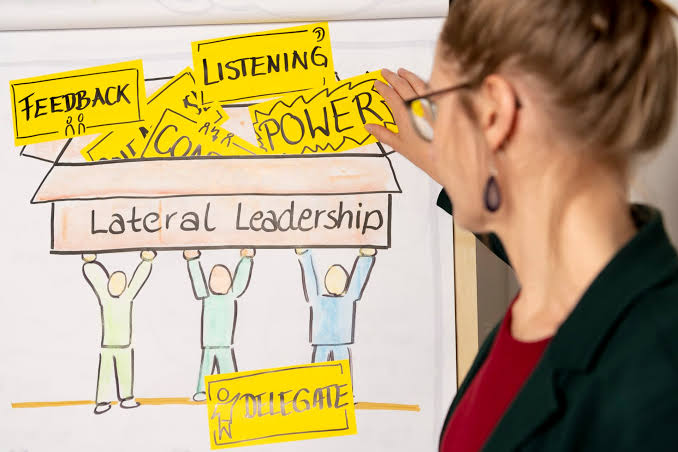
Participants will be introduced to the concept of lateral leadership, develop their professional skills in their role and, in particular, practise communication-based leadership tools. The aim is for participants to understand the concepts of role and lateral leadership. They will practise changing their perspective and reflect on their leadership responsibilities within the organisation.
This gives rise to the following topics:
- Role (definition: what does authenticity mean?)
- Leadership and lateral leadership (definitions and aspects)
- The three pillars of lateral leadership: trust, communication, power
- Communication techniques: active listening, WWW feedback
- Power: examining one’s own attitude to power, sources of power, micro-politics
- Conflict analysis and management: functions of conflicts, typology, changing perspectives
- Communicating expectations and delegating, including situational leadership and motivational analysis
Do you rely on the cooperation of others to achieve your goals, but are not in a position where you have formal authority to issue instructions to staff? Are you unable to rely on hierarchical power to coordinate the efforts of others, or do you supervise students without formal leadership responsibility? If so, you will benefit from learning about the concept of lateral leadership. Lateral leadership refers to leading without hierarchical authority – a phenomenon that many PhD students and postdocs experience in their academic work.
In this workshop, we will explore the fundamental tools available to lateral leaders: trust, communication and, indeed, power. You will be able to apply these directly to your own professional situation through practical exercises and learn from the other participants in peer exercises. You will also practise communication techniques and how to give feedback, and analyse not only conflicts but also the sources of power you can draw upon. Furthermore, we will address the question of how to communicate expectations and delegate tasks. By the end of the workshop, you will have reflected on your role and gained a clearer understanding of how to utilise leadership skills in your position.

Contact TU

M. A. Carina Engelhardt
Phone: +49 5323 72-7753
E-Mail: carina.engelhardt@tu-clausthal.de
Address
Graduate Academy
Clausthal University of Technology
Building A1, Room: 203a
Adolph-Roemer-Str. 2a
38678 Clausthal-Zellerfeld