
 Deutsch
 English
Target group: Scientific Staff, doctoral candidates, postdocs
Date: 12.02.2027; 9 am - 5 pm (in person)
Date: 13.04.2027; 2 pm - 5 pm (online)
The dates build on each other and your attendance is required on both days.
Location: Room 119, Rechenzentrum (Building B5), Erzstr. 18
Trainer: Daniel Grundke
Course language: German
Frequency: regularly/annually
Work units: 16
Registration: until 28.01.2027
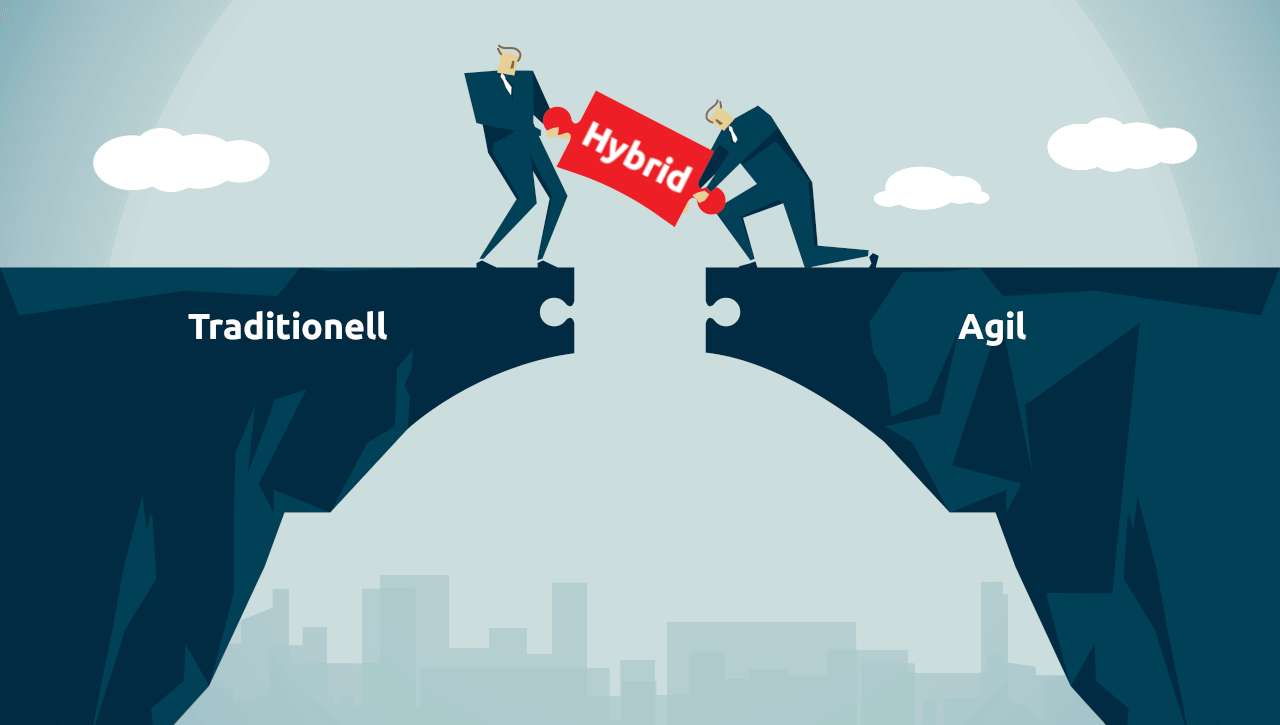
Increasingly individualized and complex requirements are making it more challenging for project managers to manage internal and external projects. Knowledge of agile and hybrid project management is a critical factor for success in ensuring more efficient and reliable project execution. Through optimal and, above all, incremental project management, participants gain the ability to demonstrate a higher level of professionalism toward diverse stakeholders—both internal and external—through improved work organization. This enhances the standing and reputation of the organizational unit or department in both the short and long term. In addition, the techniques and methods of (agile) project management ensure that work results are more verifiable and predictable.
For this reason, the seminar focuses on the fundamental elements and working techniques of agile project management, as well as the most important techniques and methods. In this seminar, participants will learn all the essential building blocks from A to Z and will be introduced to working as a SCRUM team through various practical case studies and a self-designed simulation exercise. In addition, there will be introductions to the Kanban method for process optimization and Design Thinking for creative problem-solving.
Questions
- How can sprint goals be defined effectively, and how can projects be broken down into meaningful sprints?
- How is the customer involved in the project throughout the entire project execution process?
- What parameters are important when measuring success or failure in agile projects?
- How can bottlenecks—whether personnel-related, financial, or structural—be effectively addressed?
- How can all members of the sprint team work together as a unified team without losing sight of the many stakeholders?
- And how can agile project management be integrated into the organization step by step?
Modular Course Structure
Module 1: Introduction to agile working methods, including KANBAN and Design Thinking.
Module 2: Introduction to SCRUM and start of the project simulation in project teams.
Module 3: Dealing with changes during the course of the project and when introducing agile methods.
Module 4: Communication processes in agile work and helpful software tools.
Contact TU
Dipl.-Geol. Caroline Maas
Phone: +49 5323 72-2145
E-Mail: graduiertenakademie@tu-clausthal.de
Address
Graduate Academy
Clausthal University of Technology
Building A1, Room: 007
Adolph-Roemer-Str. 2a
38678 Clausthal-Zellerfeld